Introduction
Screens have become a regular part of children’s daily routines. They are used for entertainment, education, communication, and even homework.
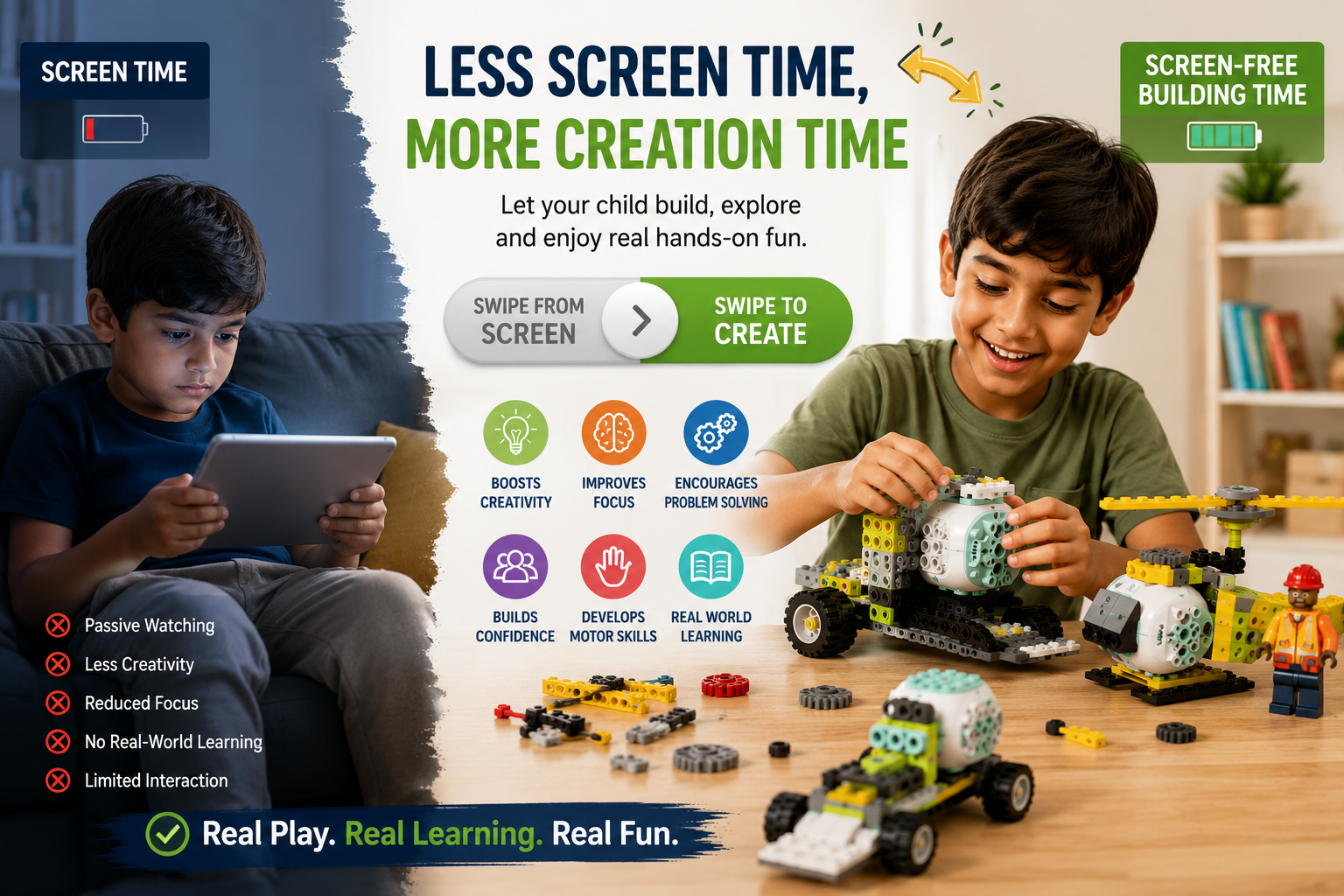
However, children also need time away from screens to build, explore, move, imagine, and create with their hands.
For children who love construction toys, machines, vehicles, robotics, or experimenting with different parts, screen-free play can be especially exciting. Instead of passively watching something happen, they get to make it happen themselves.
From building motorized models to creating cardboard cities, here are some of the best screen-free activities for children who love building.
Why Screen-Free Building Activities Matter
Screen-free building activities allow children to interact directly with physical objects.
They can touch different materials, connect parts, test ideas, notice mistakes, and improve their designs. This type of active play encourages children to think independently rather than simply follow what appears on a screen.
Hands-on building activities can help children practise:
-
Creative thinking
-
Problem-solving
-
Hand-eye coordination
-
Fine motor skills
-
Spatial awareness
-
Patience and concentration
-
Planning and organisation
-
Communication and teamwork
Most importantly, building gives children a sense of ownership.
They are not just consuming content. They are creating something new.
1. Build a Motorized Vehicle
Motorized building toys are ideal for children who are curious about how machines move.
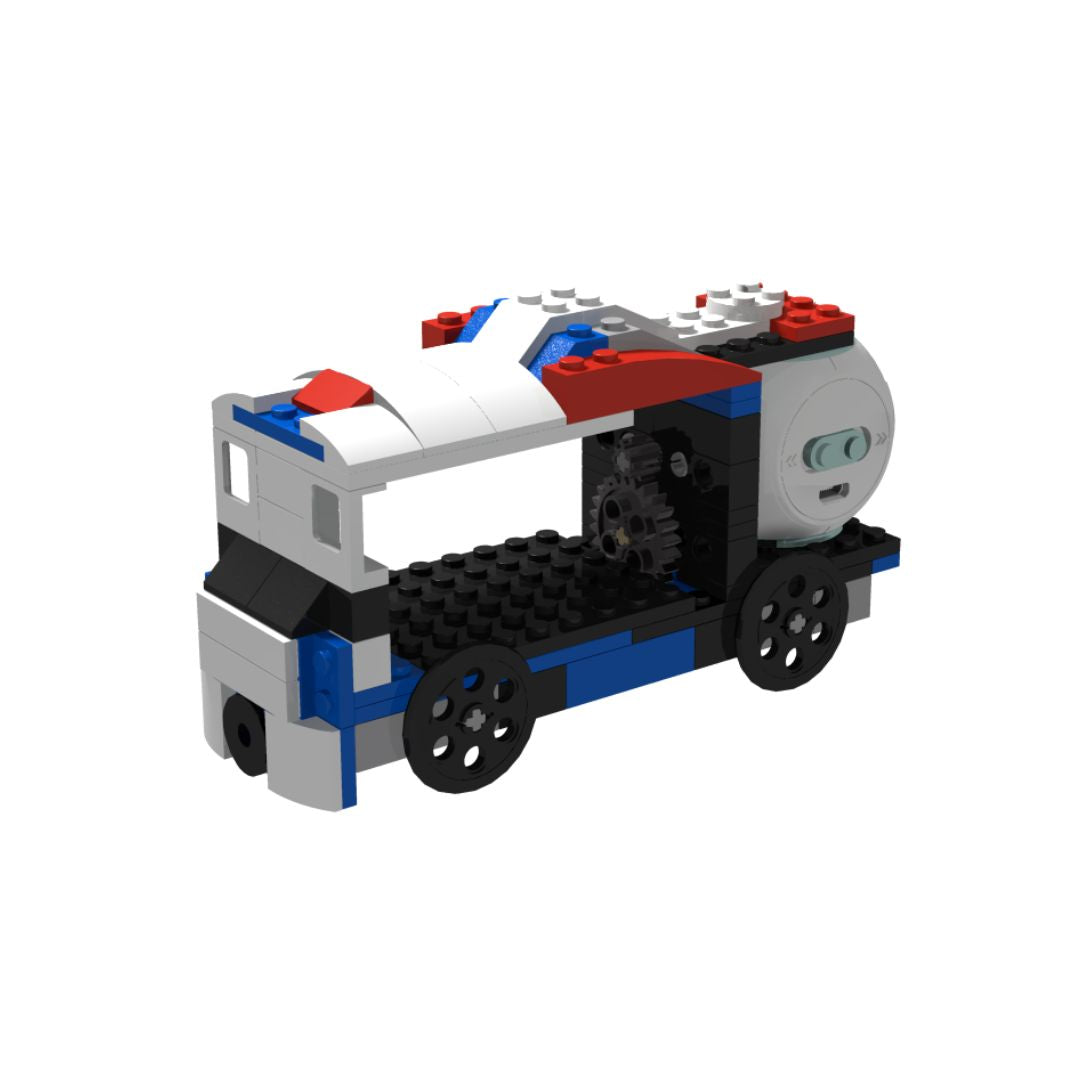
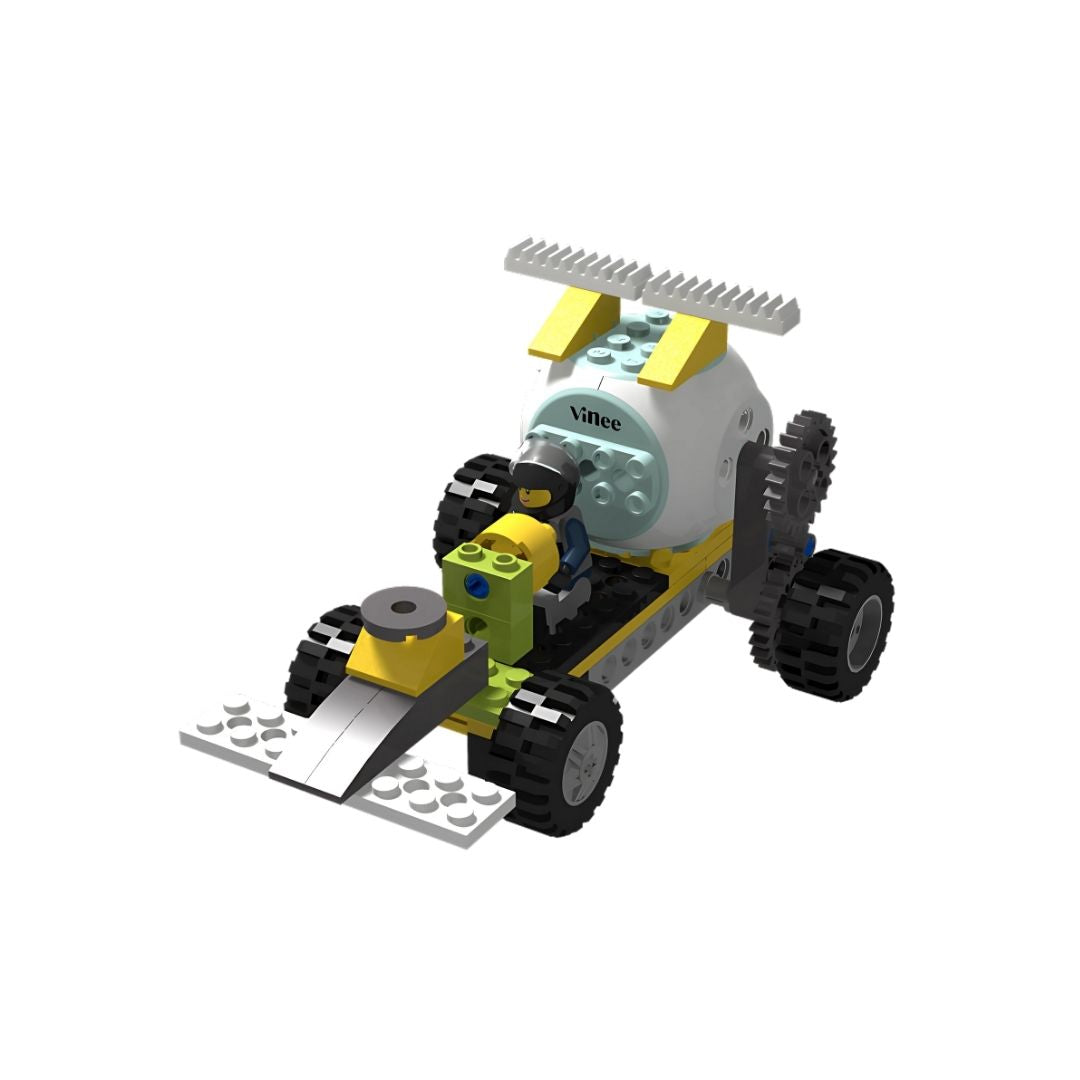
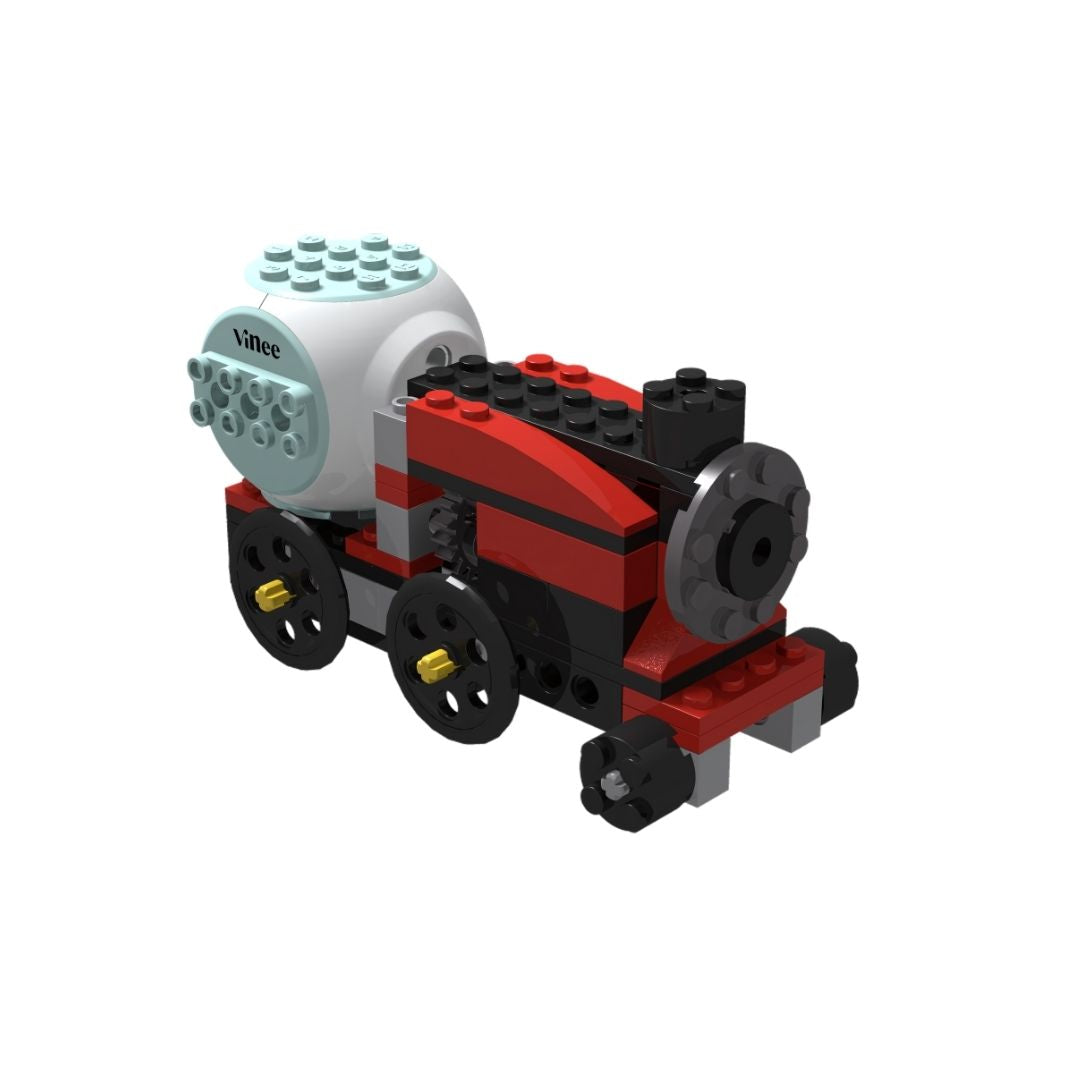
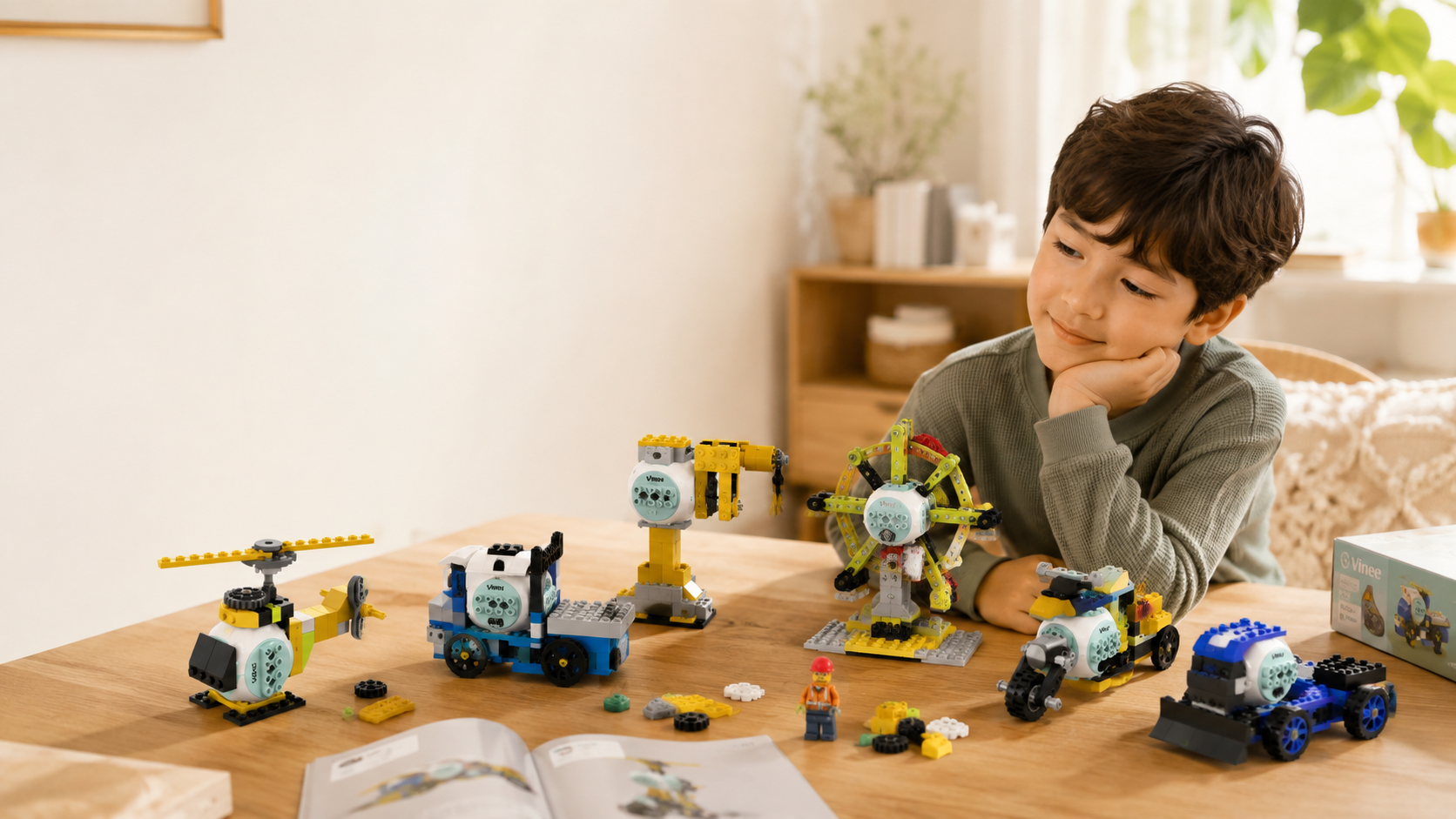
Children can build a truck, car, construction vehicle, train, or another moving model. Once the structure is complete, they can connect the motor and observe how energy is transferred to the wheels or moving parts.
This activity helps children explore concepts such as:
-
Motors
-
Wheels and axles
-
Gears
-
Movement
-
Speed
-
Balance
-
Mechanical connections
After completing the basic model, encourage the child to modify it.
Ask questions such as:
-
Can you make the vehicle longer?
-
What happens when you add larger wheels?
-
Can you build a stronger front section?
-
How much weight can the vehicle carry?
-
Can you create your own vehicle design?
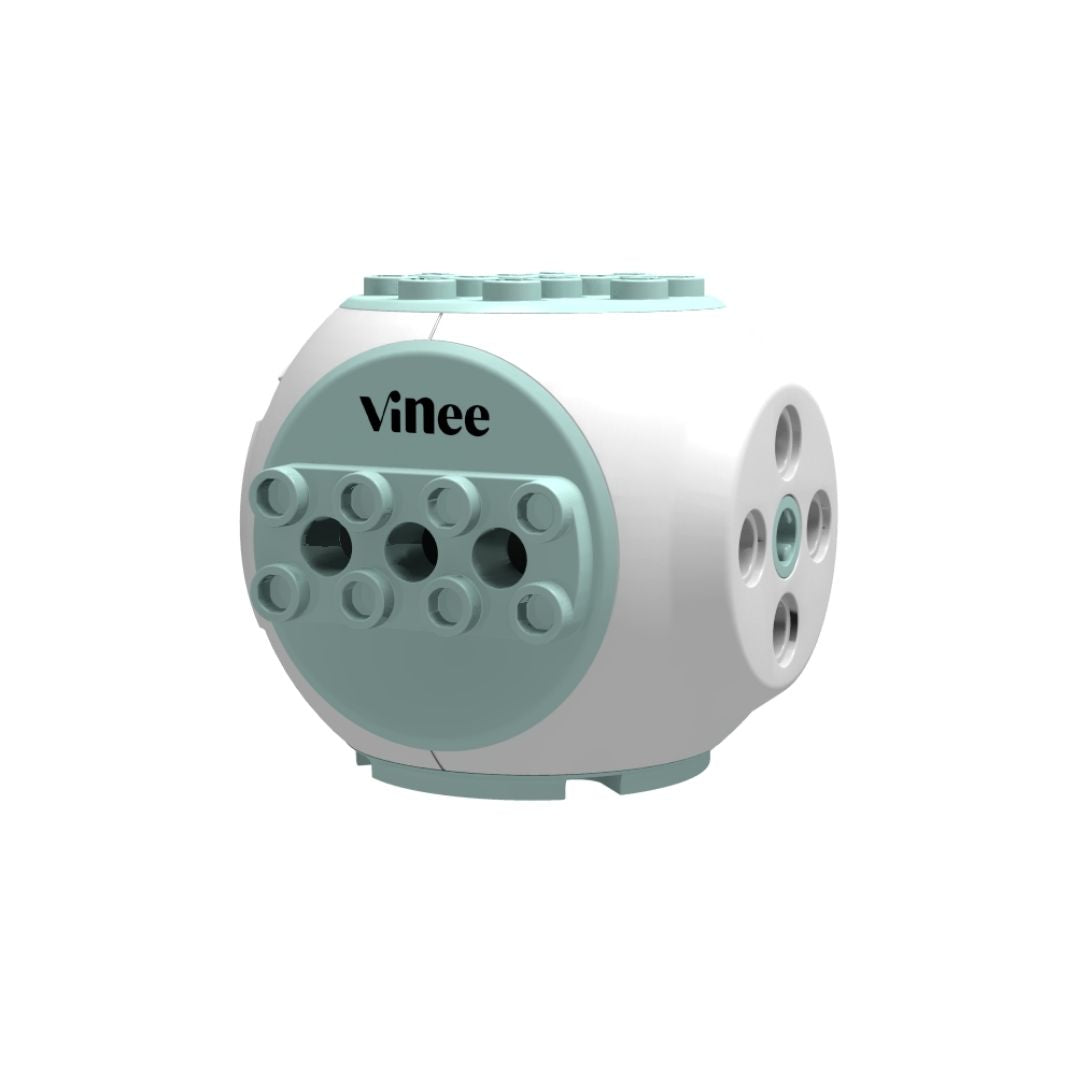
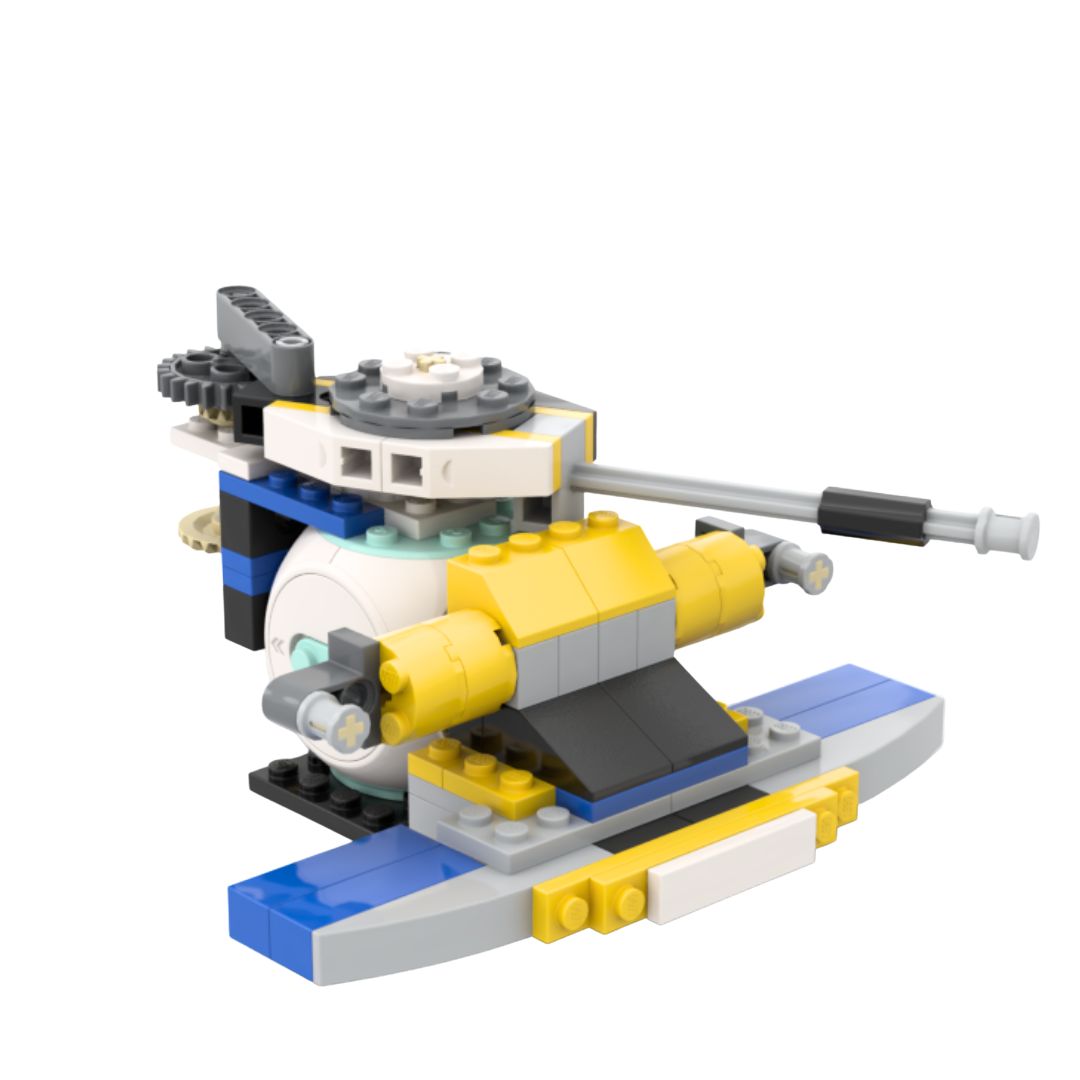
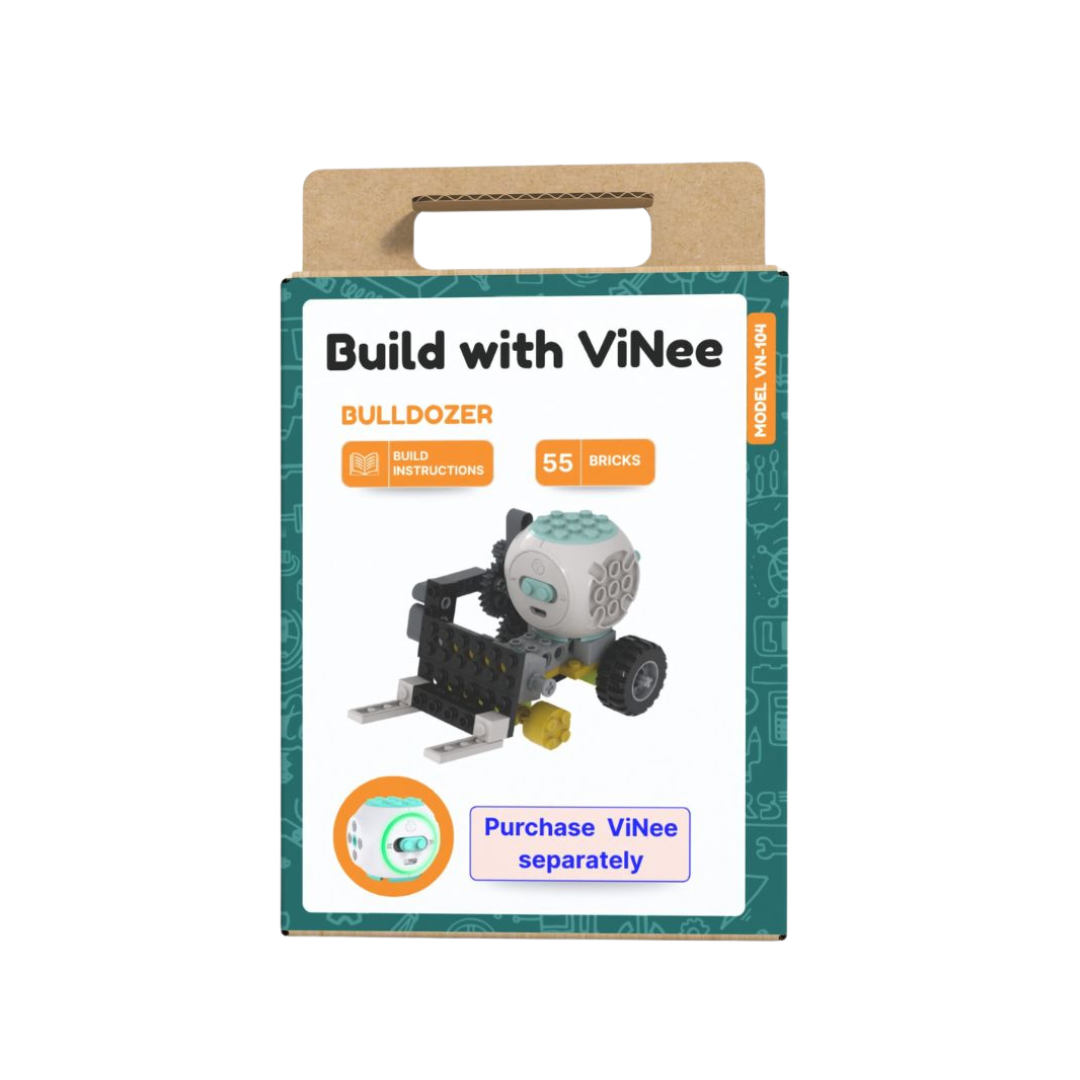
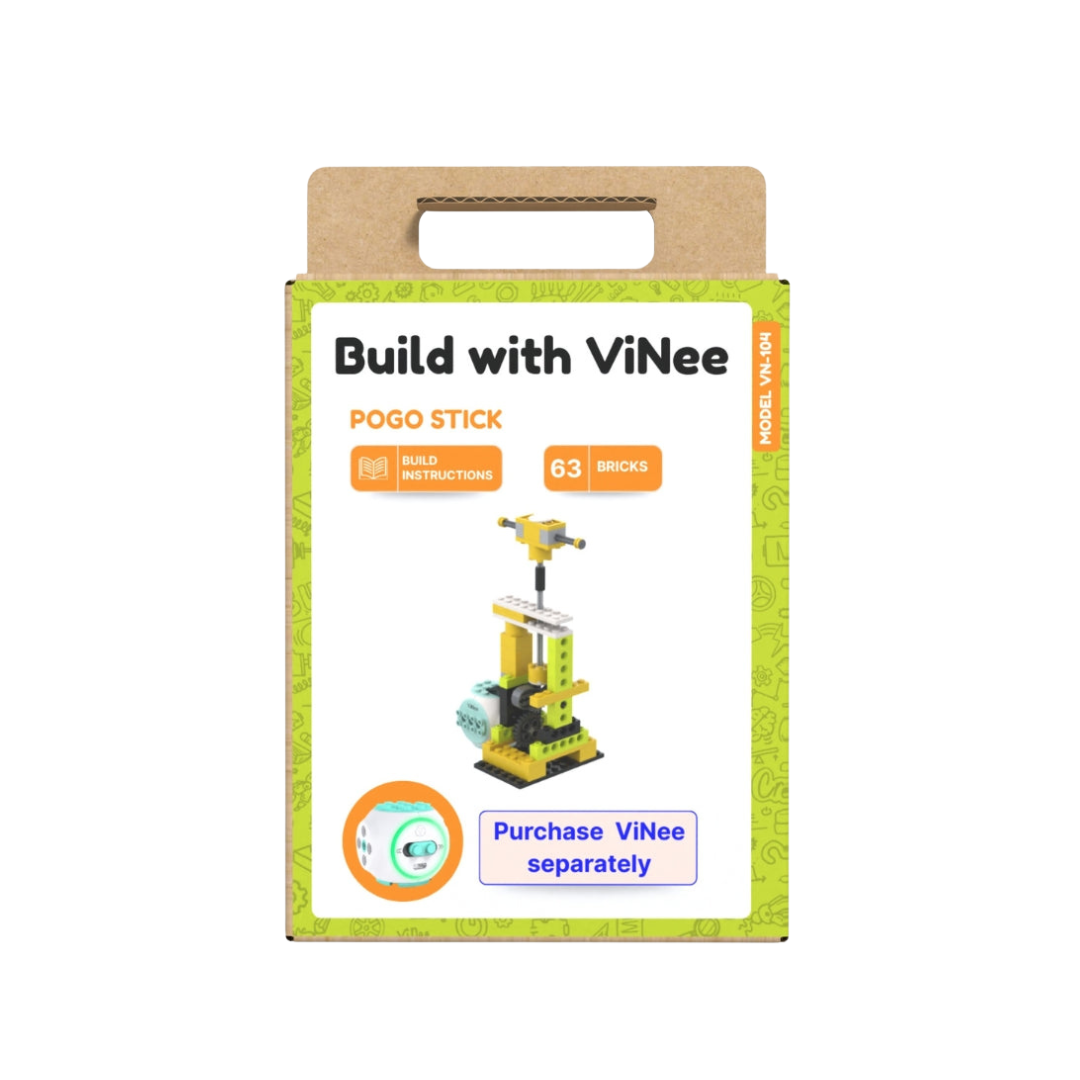
Vinee Robot’s motorized building kits allow children to move beyond static construction and experience the excitement of watching their creation come alive.
2. Create a Cardboard City
Cardboard boxes can become houses, shops, schools, bridges, garages, towers, or complete cities.
Give children a collection of safe materials such as:
-
Small cardboard boxes
-
Paper tubes
-
Child-safe scissors
-
Tape
-
Glue
-
Coloured paper
-
Crayons or markers
-
Bottle caps
-
Craft sticks
Children can begin by planning their city on paper. They can decide where roads, parks, houses, bridges, and buildings should be placed.
This activity combines construction with storytelling.
Once the city is ready, children can add toy vehicles, figures, traffic signs, or motorized models. They can also create stories about the people and machines operating inside their city.
3. Build the Strongest Paper Bridge
A paper bridge challenge is a simple engineering activity that requires very few materials.
Give the child sheets of paper, tape, and two objects that can act as supports. The goal is to build a bridge that can hold as much weight as possible.
Children can test different designs, including:
Use coins, toy blocks, or small objects to test the bridge.
After each test, ask:
-
Where did the bridge bend?
-
Which section needs more support?
-
Did folding the paper make it stronger?
-
How could the design carry more weight?
This activity introduces children to structural strength, balance, weight distribution, and engineering design.
4. Design a Marble Run
A homemade marble run can be created using cardboard tubes, folded paper, boxes, and tape.
Children can attach the pieces to a cardboard sheet or arrange them along a safe wall surface. The goal is to create a path that allows a marble or lightweight ball to travel from the top to the bottom.
They can experiment with:
-
Steep and gentle slopes
-
Tunnels
-
Turns
-
Drops
-
Obstacles
-
Funnels
-
Multiple pathways
If the marble stops, falls, or moves too quickly, the child must identify the problem and adjust the design.
This makes a marble run an excellent activity for learning about gravity, speed, angles, motion, and cause and effect.
Adult supervision is recommended when small marbles are used, especially around younger children.
5. Build a Moving Machine with Gears
Children who enjoy understanding how things work may love experimenting with gears.
Using compatible construction bricks, gears, axles, connectors, and a motorized hub, children can create a machine with moving parts.
The machine does not need to look like a real vehicle or tool. It can simply be an experimental mechanism.
Encourage children to observe:
-
Which gear starts moving first?
-
Which direction does each gear turn?
-
What happens when a small gear turns a large gear?
-
What happens when a large gear turns a smaller gear?
-
How can the movement reach another part of the model?
This activity helps make mechanical concepts easier to understand because children can physically see how movement travels through a system.
How to Keep Screen-Free Activities Interesting
Children may lose interest when an activity feels too difficult, too repetitive, or too controlled.
Parents can keep building time enjoyable by allowing children to make choices.
Let them choose:
-
What they want to build
-
Which materials they want to use
-
Whether they want instructions or open-ended play
-
Whether they want to work alone or with someone
-
How they want to decorate the final creation
Avoid correcting every small mistake.
A model that falls, stops moving, or looks different from the example can create an opportunity for the child to think and experiment.
Instead of immediately fixing the problem, ask:
-
What do you think happened?
-
Which part should we check first?
-
What could make it stronger?
-
What would you change?
-
Should we test another idea?
Choosing the Right Building Activity by Age
Every child develops at a different pace, so activities should be selected according to their comfort, experience, and ability.
Younger children
Choose larger pieces, simple structures, stacking activities, basic vehicles, and short building challenges.
Focus on safe exploration, colours, shapes, and simple connections.
Primary school children
Introduce motorized models, simple gears, bridges, towers, marble runs, vehicles, and open-ended construction challenges.
Encourage them to predict what will happen before testing the model.
Older children
Offer more complex mechanisms, design challenges, structural experiments, invention projects, and activities involving multiple moving parts.
Encourage children to record their designs and explain how their machines work.
Always follow the recommended age guidance and supervise activities involving motors, batteries, small components, cutting tools, or potentially unsafe materials.
Turn Screen-Free Time into Creation Time
Screen-free time does not need to feel like a punishment or restriction.
For children who love building, it can become an opportunity to create vehicles, machines, cities, towers, bridges, and completely original inventions.
The most valuable activities are not always the ones that produce a perfect final model. They are the ones that encourage children to ask questions, test ideas, solve problems, and try again.
With motorized building kits from Vinee Robot, children can experience the excitement of turning individual pieces into moving creations.
They do not simply watch machines on a screen.
They build them, test them, understand them, and bring them to life.
Explore Vinee Robot’s screen-free motorized building kits and inspire your child to build something amazing.