Introduction
Children are naturally curious about how things work. They want to know why wheels turn, how machines move, what makes a fan rotate, and how different parts work together.
Motorized building toys turn this curiosity into an exciting learning experience.
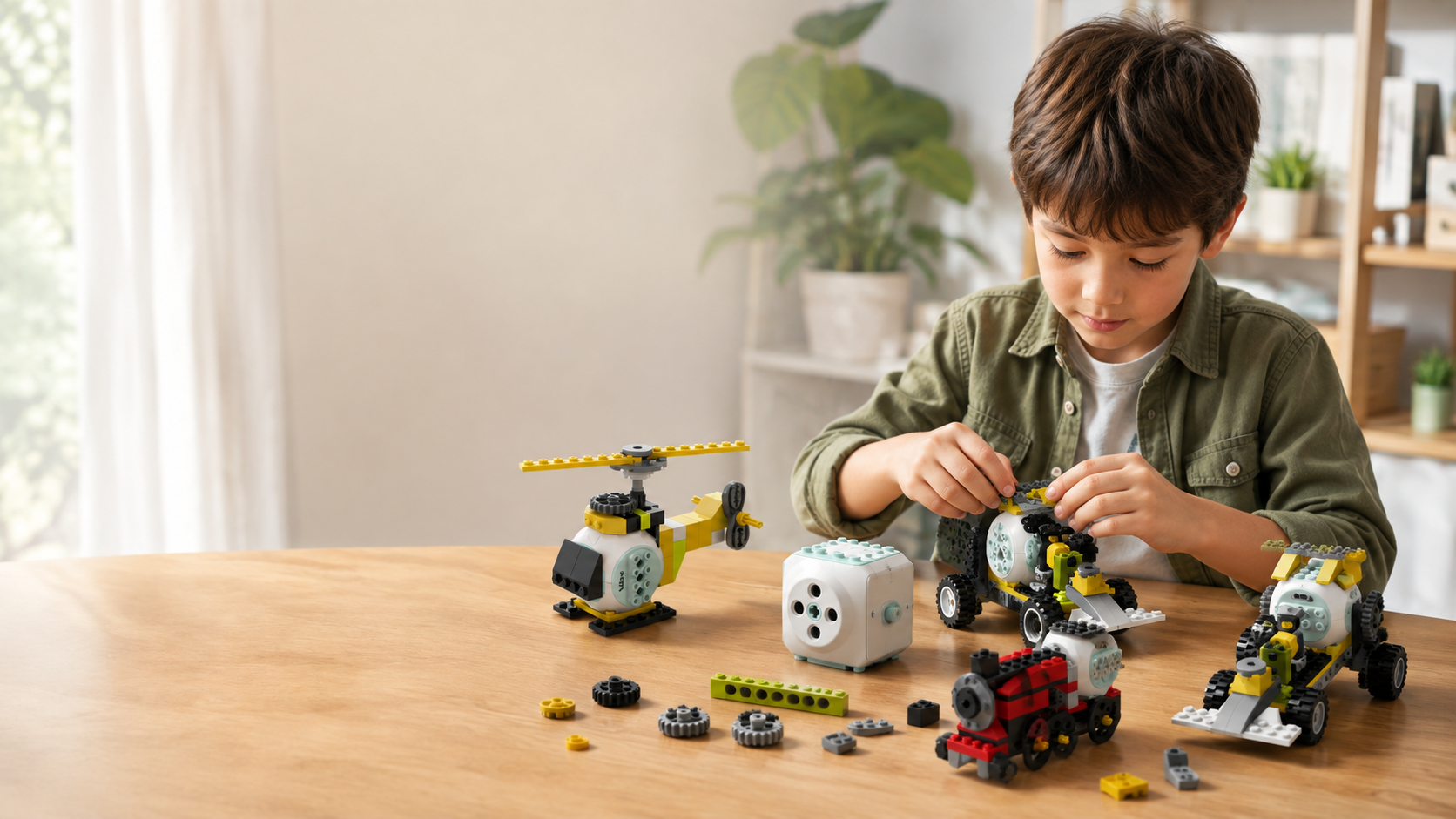
Unlike ordinary toys that arrive ready to use, motorized construction kits encourage children to build a model piece by piece, connect its moving components, and discover how a motor brings the creation to life.
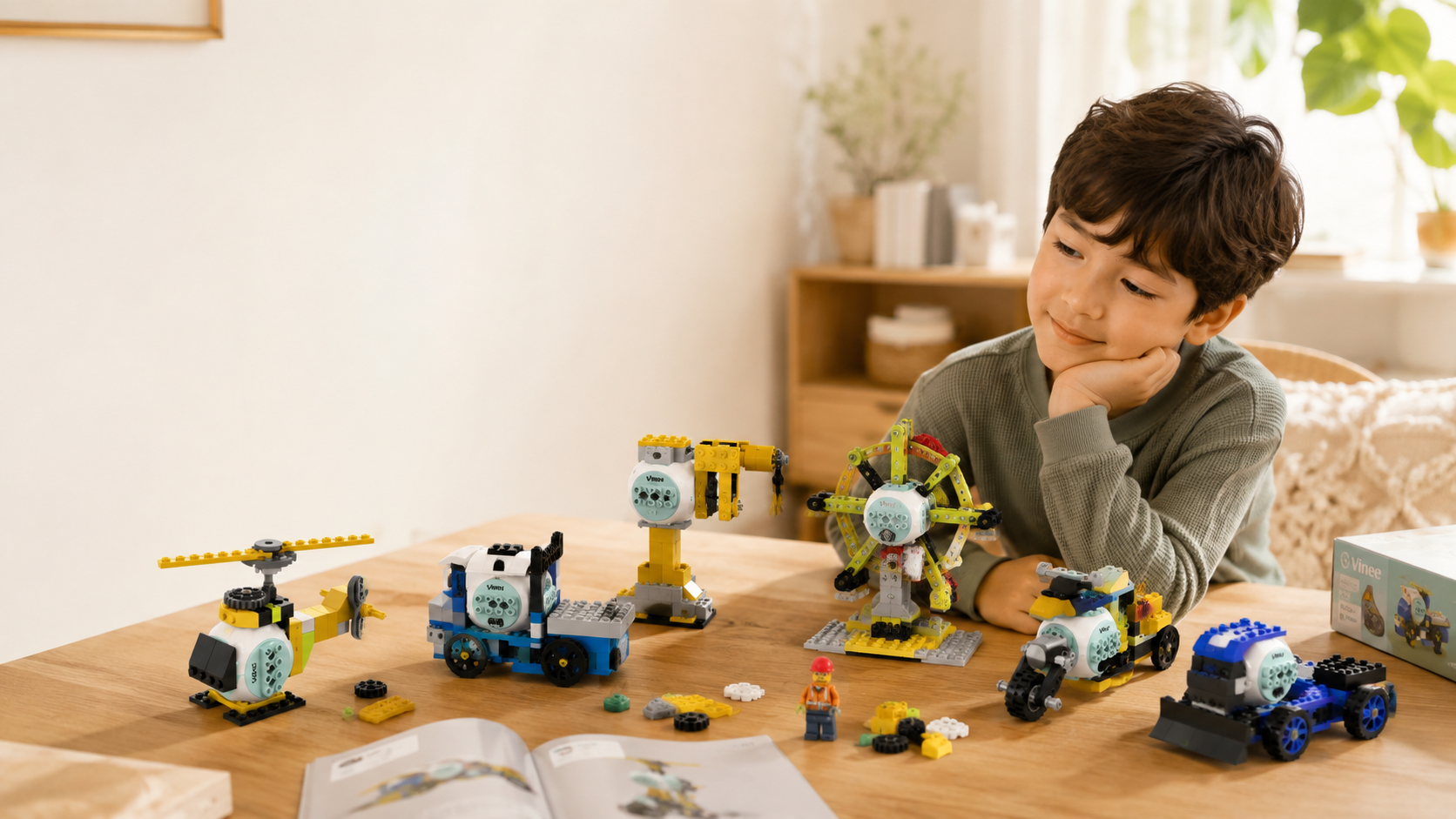
Whether they are building a truck, helicopter, Ferris wheel, power drill, train, or an original invention, children are not simply playing. They are exploring many of the same ideas that engineers use to design real machines.
What Are Motorized Building Toys?
Motorized building toys combine construction bricks, gears, axles, wheels, connectors, and a powered motor.
Children first assemble the model and then connect the motor to its mechanical parts. When the model starts moving, they can see the result of every building decision they made.
This makes engineering easier to understand because children are not only reading about movement or looking at a diagram. They can see, touch, test, and change a working mechanism.
Construction play can introduce children to science and mathematics concepts such as simple machines, gravity, force, geometry, design, and problem-solving in a meaningful, hands-on way.
1. Children Discover How Motors Create Movement
A motor converts electrical energy into mechanical movement.
That explanation may sound complicated to a young child. However, it becomes much easier to understand when they build a model, turn it on, and watch the wheels or propellers move.
Through hands-on experimentation, children begin to understand a simple sequence:
Power activates the motor → the motor rotates → the rotation moves other parts → the model performs an action.
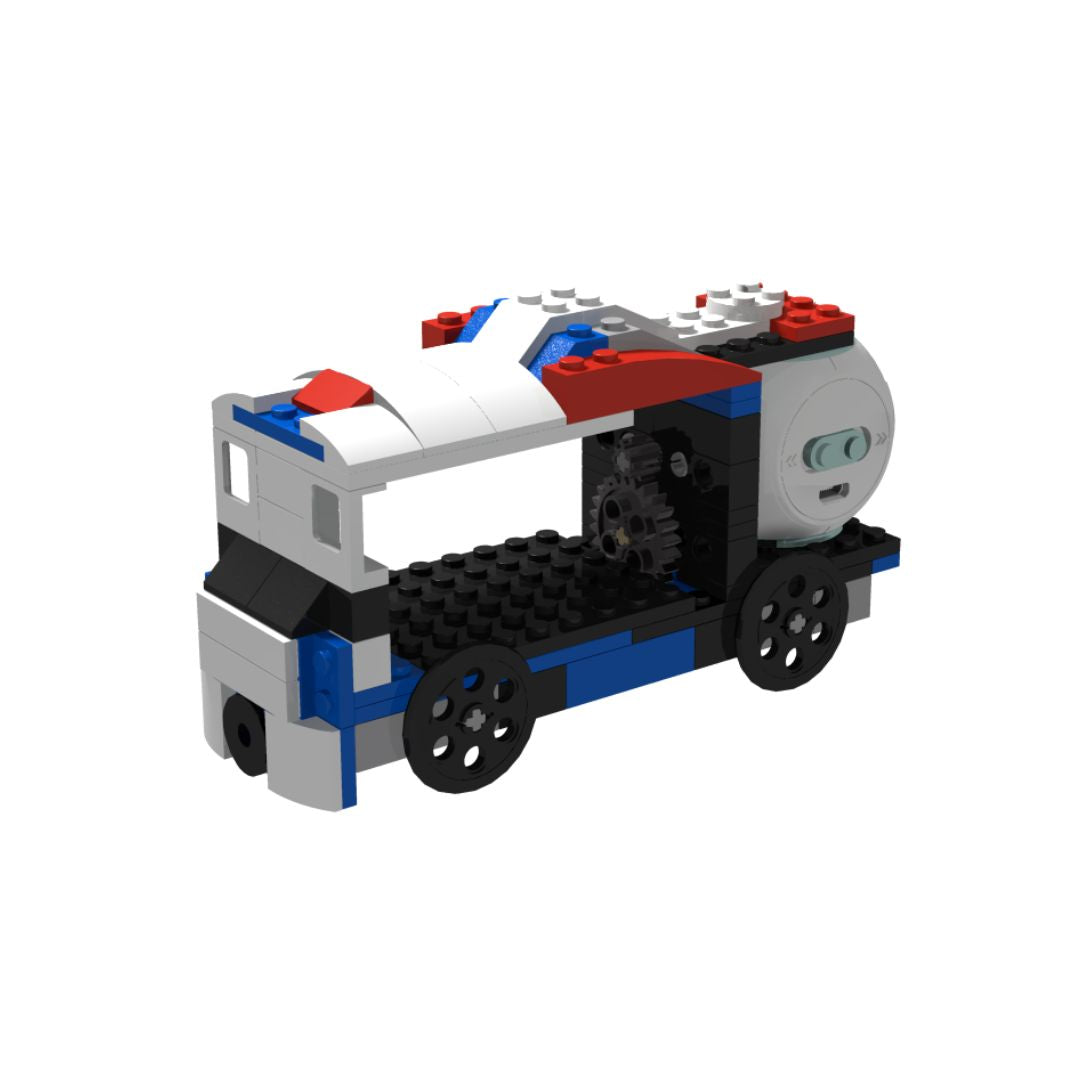
For example, when children build a motorized truck, they see how the motor powers the mechanism that turns its wheels. When they build a helicopter, they can observe how rotational movement reaches the propeller.
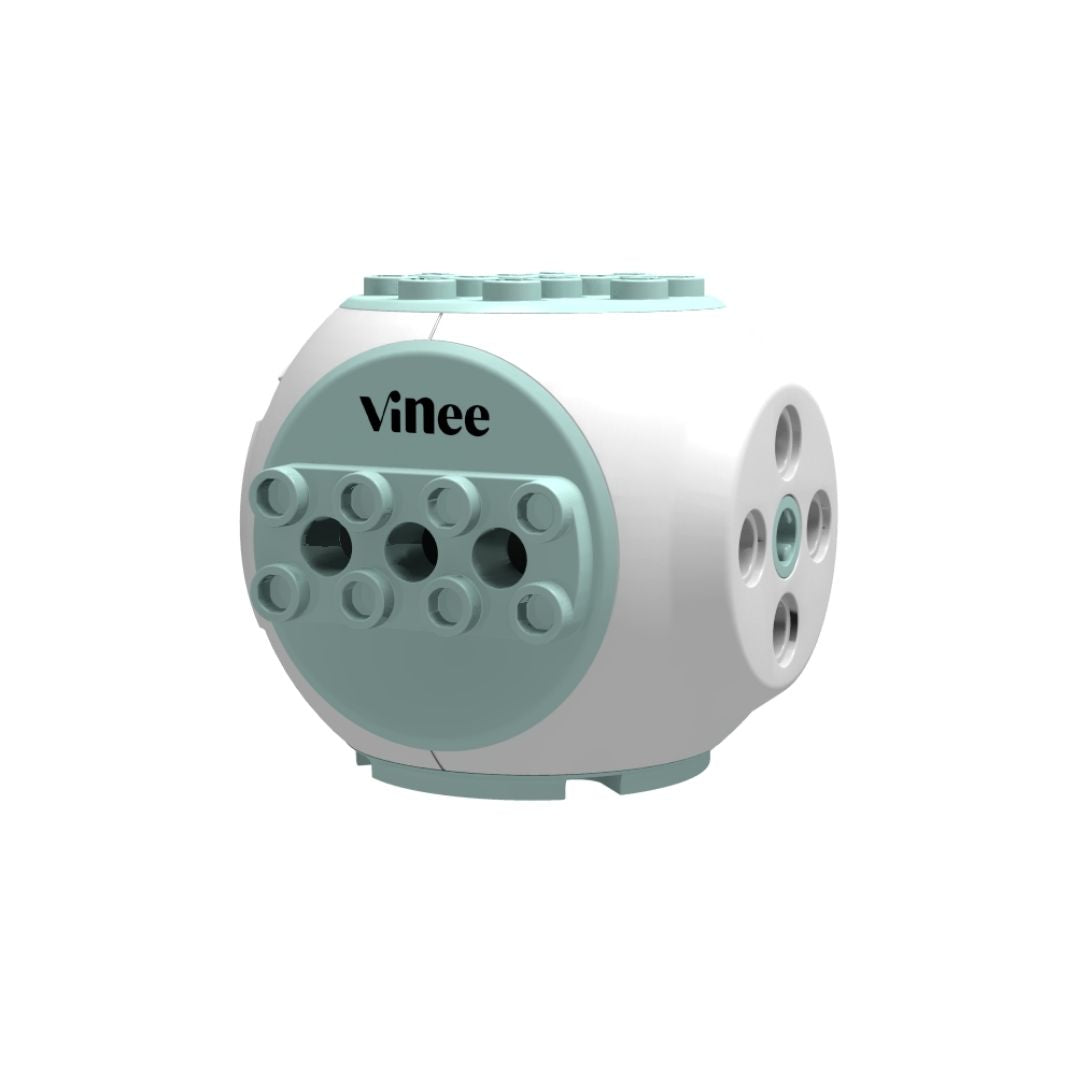
The Vinee Hub is designed as a reusable motorized core that powers compatible construction-brick models. It allows children to experience mechanical movement without requiring advanced programming knowledge.
2. Gears Become Easier to Understand
Gears are used in many everyday machines, including bicycles, clocks, vehicles, kitchen appliances, and industrial equipment.
However, understanding gears from a textbook can be difficult. Motorized building toys allow children to physically connect gears and observe what happens.
They can explore questions such as:
-
What happens when a large gear drives a smaller gear?
-
Why does one arrangement move faster?
-
Why does another arrangement produce more force?
-
How can gears change the direction of movement?
-
What happens when two gears are not properly aligned?
By changing the gear arrangement, children can observe how speed, direction, and power are affected.
For example, Vinee’s motorized Power Drill model introduces children to rotational motion and how gear systems transfer power. Its Helicopter kit also allows children to experiment with gear ratios and propeller speed.
Instead of memorising definitions, children learn by seeing the results of their own changes.
3. They Learn About Rotational Motion
Rotational motion happens when an object moves around a fixed point or axis.
Children can observe rotational motion in:
-
Wheels
-
Fans
-
Propellers
-
Drills
-
Gears
-
Ferris wheels
-
Pulleys
A motorized Ferris wheel is an excellent example. When the motor turns the gear system, the entire wheel rotates around its centre.
As children build and operate the model, they can explore how gears, balance, structural support, and motor power work together to create smooth circular movement.
These observations help children connect engineering ideas with machines they see in everyday life.
4. Building Teaches Cause and Effect
Engineering is based on understanding how one action affects another part of a system.
If a gear is placed incorrectly, the model may not move. If the structure is unstable, it may fall. If a wheel is blocked, the motor may not transfer movement effectively.
These moments are valuable learning opportunities.
Children begin to understand:
-
“The model is not moving because these gears are not touching.”
-
“The wheel is stuck because this brick is blocking it.”
-
“The structure is falling because the base is too narrow.”
-
“The movement is slow because the mechanism has too much resistance.”
Every adjustment helps children understand the relationship between a problem and its possible cause.
This is the beginning of systems thinking—the ability to understand how individual parts work together as one complete machine.
5. Children Follow the Engineering Design Process
Professional engineers rarely create a perfect design on their first attempt. They identify a problem, plan a solution, build a prototype, test it, and improve it.
Children follow a similar process while using motorized construction toys:
-
Imagine what they want to create.
-
Plan how the model should be built.
-
Build the structure and mechanism.
-
Test whether it works.
-
Identify what needs improvement.
-
Rebuild the model.
-
Test again.
When a model does not work immediately, children are encouraged to inspect it rather than simply abandon it.
Educational research describes tinkering as an important part of STEM learning because it involves asking questions, testing ideas, solving problems, making improvements, and sharing discoveries.
The rebuilding process teaches children that mistakes are not failures. They are useful information that can lead to a better design.
How Parents Can Support the Learning Process
Parents do not need to provide every answer. Asking the right questions can be more helpful than immediately fixing the model.
Try asking:
-
What do you think this gear does?
-
Which part receives movement from the motor?
-
Why do you think the wheels are not turning?
-
What could make this structure stronger?
-
What changed after you moved that gear?
-
Can you build another machine using the same mechanism?
These questions encourage children to observe, explain, predict, and test their own ideas.
Parents can also invite children to explain the finished model. Teaching someone else how a machine works helps children organise their thoughts and strengthens their understanding.
More Than a Toy: A Foundation for Future Learning
Motorized building toys do not turn children into professional engineers overnight. What they can do is give children an early and enjoyable introduction to the way engineers think.
Through every build, children explore:
Most importantly, these concepts are experienced through active play rather than passive instruction.
Build, Test, Discover and Create with Vinee
Vinee Robot combines construction play with real motorized movement, helping children turn their ideas into working creations.
From trucks and helicopters to Ferris wheels and power tools, every Vinee build offers children an opportunity to explore how machines work, solve challenges, and create something they can proudly call their own.
With Vinee, children do not just assemble toys.
They build, test, discover, improve and begin thinking like young engineers.
Explore Vinee Robot’s motorized STEM building kits and bring your child’s imagination to life.